Thursday, October 21

Review: Splice

Science fiction horror has, paradoxically enough, always been more about people then anything else. But it makes sense if you give it a little thought. Human drama is always about confronting characters with situations that are new to them, thus creating conflict. And what makes a better drama then setting the characters (and the viewer) up against something that is truly new, namely something that hasn't existed before? Which is what monster story writers have been doing for almost 300 years now.

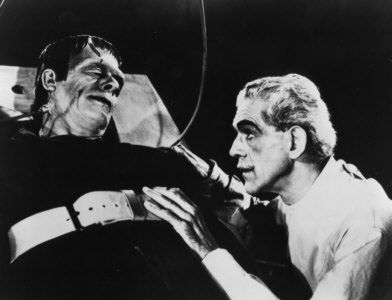
Take, for instance, the famous story of Frankenstein. A man builds a creature. He is, however disappointed in his work and abandons his creation. The "monster" then vows revenge and starts killing people close to his creator. When Frankenstein (the scientist, not the monster) dies, however, the monster can be seen grieving at his dead body.

If you strip away all the "we must not play God" and "science must not get out of hand" subtext, you will have to recognize that this is a very male-centered story. You can read it like a distorted father-son relationship, in which both act out their aggression on anything but each other. The problem here comes directly from reckless and emotionally detached creation and a lack of nurturing and motherly love, two attributes which are traditionally male (by which I mean that they are usually contributed to men. I'm not saying all dudes are heartless bastards).
D'aaawh

The funny thing is that this male perspective is, perhaps more even then in other genres, a staple of the horror genre (science fiction tends to be more emancipated). Psycho, The Exorcist and even The Shining*  all are about battles that are fought out between men, with women trapped hopelessly in between. There are exceptions, but they are few and rarely contain a truly female perspective.

Enter Splice.

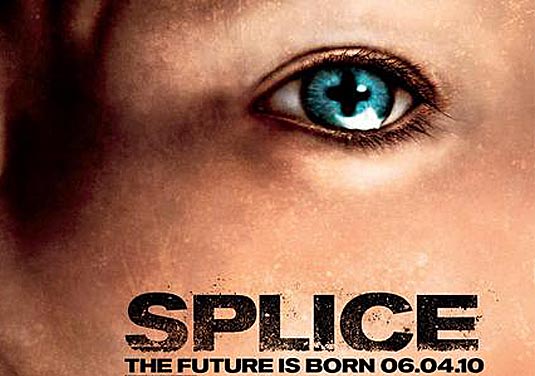
Splice is a 2009 monster movie that tells the story of Clive and Elsa, a couple of biochemists at work and in the bedroom. At the beginning of the film, they have just completed their latest project: splicing the DNA of several species together to create a new specie. But just as all the pieces are falling into place (including an interview in Wired) and they can pursue the next medical breakthrough in science, their project is plugged. Elsa, who is clearly the dominant one in the relationship, pushes Clive to continue working on their next project in secret: splicing animals with human DNA. What comes out is Dren (nerd spelled backwards), who looks like one of David Cronenbergs erotic nightmares and behaves like a mix between a sweet little girl and one of the facehuggers from Alien, including adolescent mood swings and an Oedipus complex. She (it?) is never truly an animal, but not completely human either. She's more like a force of nature. Clive wants to destroy her, but Elsa feels responsible for the creature and decides to keep it. She soon starts to nurture Dren like a child. I won't have to spell out that this is not a very good idea.

Above: not a very good idea

Splice's concept is, as you might see, pretty damn original. It's Elsa's mother instincts and nurturing reflexes that set most of the film in action, not Clives curiosity. And it's implications are rather groundbreaking as well: where most "creature features" lay the blame squarely on reason going wild without any ethical or emotional concern, Splice seems to say that it's emotion meddling up peoples logical thinking that really makes the shit hit the fan. In fact, instead of saying that the science going rogue is the issue at hand, you can see Splice as laying the blame on the supposed moral outcry of the general public that forces Clive and Elsa to go rogue. Stuff to think about.

The movie is not without it's faults, however. To reach some interesting dilemma's, the characters do things that are just impossibly stupid, especially for a couple of supposedly brilliant scientists. And staying on the subject of science: the theoretical framework for the movie is loose at best, and the "scientific"babble Clive and Elsa sometimes retort to is more then a little dumb. The movie also never gets anywhere near scary, which some people might find a letdown. On the other hand, the acting is pretty good and the special effects (especially those of the creatures) are rather spectacular for such a low-budget indie movie. And the film kept my full attention for an hour and a half, which is quite a feat in and on itself.

Splice is a movie that doesn't get interesting unless you are willing to think about it. In that respect, it is a rather good and intelligent movie. If you like discussing movies after you've seen them, Splice is a recommendation. If you want a movie to stand solely on it's own, however, you might be a bit disappointed.


Alias

* The Shining, the way I see it at least, is all about Jack vs. himself. His wife is basically a stock character.

P.S.Wow, we can have movies with dominant females that are not evil mothers or dominatrixes now! Yay for emancipation!

Eels are awesome.

Thursday, September 30

Review: The Bad Lieutenant: Port of Call New Orleans

Terrence McDonagh is a deranged, drug addicted cop, whose very life seems to be based on spiraling himself deeper and deeper into the reefer madness. He misuses his powers as policeman to steal drugs from the evidence room in the police station. He tortures wheelchair-bound old ladies for information. He "arrests" teen couples, takes their drugs, lets the girl preform sexual favors on him in exchange for his silence and then forces the boy to watch at gunpoint.


You have just been introduced to the hero of the movie. I remember thinking to myself: "Is this guy good or bad?". And then I remembered: "Wait, this is a Werner Herzog film. He doesn't do puny stuff like morality". And it shows: when McDonagh decides to kick the habit, his entire destructive life comes crashing down on him. It's not until he starts pumping anything slightly mind-altering he can find into his body again that everything (almost magically) works out. Some movies might not give a good example, but this one is not even trying. 


The movie is, as was to be expected, strange beyond belief. It's also shocking, vulgar and as amoral as movies get these days. Needless to say, I absolutely loved it. Weird as it might be, the movie is also screamingly funny. I rarely pause a movie because I am laughing so hard that I'm afraid I might miss something, but The Bad Lieutenant managed it. The scene in question involved Nicolas Cage acting opposite two imaginary iguanas. Yes, the iguanas of his imagination. 


These iguanas. They have to be my favorite iguanas ever.

Werner Herzog only seems to make fiction films about one type of person: the deranged man who nevertheless is very smart. Aguirre from The Wrath of God, Fitzcarraldo from the movie of the same name and now McDonagh all want to achieve... well, something. They definitely have the brains, the charisma and the guts for it, but are all hindered by being criminally insane. This very special kind of insanity is a staple of Herzog, and it's literally impossible to get if you've never seen one of his films.

You can take that as both a recommendation or a warning. This movie is made by two very gifted artists of whom it is almost a miracle they never worked together before: Werner Herzog and Nicolas Cage. Herzog directs like crazy (it might, in fact, just be my favorite movie of his), and Cage delivers one of the best performances of his life. You'll just have to wonder whether you are interested in watching them deliver a shot of pure madness into your spinal column. If that idea appeals to you in the slightest, consider this a huge recommendation. Everybody else: stay far, far away from this. Your brain might melt.

Alias


Is this song just a very bad joke? Yes. Apologies. But I, once again, couldn't help myself. Also, it IS a pretty tune.

The Verve - The Drugs Don't  Work
Geüpload door droogirico. - Muziek video's, interviews met artiesten, concerten en meer.

Sunday, September 26

We All Go A Little Mad Sometimes

(This essay was published before on the website www.blikonline.nl)


Nerds zijn mensen die zich graag opwinden over dingen. Over slechte sequels, over mensen die Star Wars en Star Trek door elkaar halen en over alle meisjes die niet gecharmeerd zijn van hun verzameling zeldzame Pokemon. Maar waar ze zich nog wel het meest druk over maken zijn mensen die hun hobby “niet begrijpen”. Dus toen Roger Ebert, misschien wel de meest invloedrijke filmcriticus aller tijden, zich nogal sterk uitliet tegen videogames als kunstvorm brak de hel los. De fora stonden roodgloeiend van mensen die riepen dat Ebert te oud was, dat hij er niks van snapte en dat hij de elke voeling met de jongere generatie was verloren. En die reacties waren nog beleefd.

Maar de vraag “zijn games kunst?” is er een die al langere tijd speelt. De voorstanders argumenteren meestal dat als Warhol’s soepblikken kunst zijn, Shadow of the Colossus dit ook is. Tegenstanders zeggen vaak dat als de Mona Lisa kunst is, Gears of War dit niet is. De vraag is dus eerder “wat is kunst?” dan “zijn games kunst?”.

Maar eigenlijk is dit een vreemde discussie. Zijn “boeken” immers kunst? Zijn “schilderijen” dat? Nee, niet per definitie. Maar duidelijk wel als ze een bepaalde mate van artistieke kwaliteit hebben. Anders spreken we niet van literatuur maar van lectuur, en niet van kunst maar van broddelwerk. De vraag zou dan eigenlijk moeten zijn: zijn er games die als kunst kwalificeren? En het antwoord daarop: absoluut. Zelfs binnen de lange cultuurhistorische traditie.

Neem bijvoorbeeld het cultspel Psychonauts. Gemaakt in 2005 door Double Fine, en absoluut een aanrader. Wat dit spel zo bijzonder maakt is de opzet: de levels spelen zich af in de hoofden van de mensen om je heen. Met een klein deurtje dring je letterlijk hun hersenen binnen en zie je hoe ze nadenken. De eerste helft van het spel zijn dit je vrienden en leraren, maar de tweede helft van het spel moet je een gekkenhuis doorzoeken. En dus letterlijk de geesten van de bewoners binnendringen om ze van hun mentale problemen te verlossen. Freud zou er verzot op zijn.

De artistieke relevantie van dit spel is dat dit een absoluut unieke manier is om tegen het concept van waanzin aan te kijken. Dit idee is in de kunst vaak voorgekomen, en vele grote kunstenaars hebben zich eraan gewaagd. Om het te omschrijven zijn ongeveer 3 manieren gebruikt: het laten zien van de gek in zijn omgang met anderen (Psycho, Blue Velvet), het tonen van de gedachtewereld van de gek (De Schreeuw van Munch) en spreken vanuit het perspectief van de gek (de pedofiel in Lolita van Nabokov, de cynicus in Aantekeningen vanuit het Ondergrondse van Dostojevski).

Maar wat Psychonauts doet is een normaal persoon (de speler) mengen met de verstoorde gedachtewereld van de gek. Maar in de context van het spel is die gedachtewereld de harde werkelijkheid. Natuurlijk bevindt je je het in het hoofd van een paranoïde postbode, maar als je je niet aan zijn eigen verzonnen regels houdt ben je wel mooi Game Over.

Het level (en daarmee het onderbewuste) van deze postbode ziet eruit als een doodgewone Amerikaanse suburb: losstaande huisjes, witte hekjes, plastic flamingo’s en gigantische auto’s op de oprit. Wellicht is het zelfs iets te gewoon. Maar als je deze wereld binnenstapt merk je al snel dat er iets niet orde is. Overal zitten camera’s: in de brandblussers, in de vuilnisemmers, en zelfs in de plastic flamingo’s. Ook de bewoners van de wijk zijn opmerkelijk. Gekleed in lange regenjassen en gleufhoeden proberen deze geheim agenten zich voor te doen als gewone voorbijgangers. Zo staan ze bij een open riool met gootsteenontstoppers te zwaaien en roepen ze dingen als “Look at that woman’s breasts. They are large”.


Buiten het feit dat dit bijzonder grappig is, wordt hiermee ook een complete wereld geschapen waarin alle paranoia die degene wiens hoofd je bent binnengedrongen zich manifesteert. En binnen deze voorwaarden moet jij je een weg zien te banen. En hoewel de wereld om je heen misschien gek is geworden, ben jij toch echt degene die hier de afwijkende is.

Welcome to the madhouse.

Alias

The music today is presented by mr. Leonard Cohen, who wrote this from the perspective of a madman. A madman from the RAF, to be precise. Also, the song is AWESOME.