Yes, there are games that are art. Without a doubt. There's Braid, there's Shadow of the Collosus and there's the works of Jason Rohrer. And that's really about it. There are some more examples, but like the aforementioned they are mostly either relatively obscure or didn't exactly sell well. There is a crowd for art games, but they are vastly overshadowed by the legions of players who are dedicated to Halo, Call of Duty and World of Warcraft. If you'd want to play, full-time, every genuinely artistic video game, and I mean every single one ever made, you could probably do so in a month. If you're slow. For comparison: if you want to watch every single artmovie that was made since 1972 (the year Pong was released) you'd be quick if you're done in half a year. And movies usually take a fraction of the time a game takes to complete. You'd probably never get done if you started on the books, assuming you read the newly released ones as well.

The major problem with games is that they explore only a tiny fractions of all human experiences. In games that star human characters they mostly just fight each other to the death. If a game even has dialogue for the player to partake in (and that's a big if) the themes of sexuality, boredom, pointless violence or rascism (to name just a few) aren't very likely to be dealt with in a mature and thoughtprovoking way. The state of diversity in games is even worse. I'm not saying that every game should explore these things, but they are simply a part of how human beings behave. If a game wants to go the extra mile, it has to address at least some of issues other then violence.
But that's where the crux of the issue might lie: games are, by their very nature almost, very bad at this. Allow me to explain.
First off, a games must be winnable, and winning the game must feel good. And as it turns out, most human experiences translate very badly into terms of winning and losing. Have you ever truly "won" a fight with a loved one? Have you ever really "won" at having a relationship? It's pretty clear that talking about situations like that in simple terms of winning and losing removes every nuance from them. Nuance which is crucial for properly portraying situations like these. The win/lose mechanism can even break a carefully built up nuance, something many players of the otherwise great game Ico might recognize. The absolute worst examples of this problem are the moral choice system which every game and their dog seems to have nowadays. Good and evil are some of the most difficult and fickle concepts in human society, over which philosophers have broken their heads for centuries. Simply reducing the choice in a situation to "good" (help the kitten from the tree while singing Morning has Broken) or "asshole" (set the tree on fire with a flamethrower that plays Slayer) isn't merely oversimplification. It's just plain stupid.

This picture tells the entire moral argument of Bioshock:
do I play evil which helps me play better or do I play good with a tactical disadvantage?
Secondly, most games nowadays are expected to have a certain length. If you can complete a game in a single three-hour sitting, most people feel cheated. Considering how expensive games are, this is completely understandable. But this also means that games can't really venture into deep emotional territory. Even if they find a way around the problem that people will get up and leave halfway and it will be practically impossible to build up emotion that way, it's unlikely that gamers will want to play a game that makes them depressed every time they get back to it. You'll sit down to get kicked in the balls once, but you won't sit down to get kicked in the balls three times in a row.
Thirdly, games allow for very little interpretation on the part of player. When you watch a warfilm as a pacifist, you can still take away a message of the futility of war from it. When you're actually forced to play the war, that becomes a little harder. I quit playing both Modern Warfare games after less then an hour because of this. In the first there was a part when I had to shoot NPCs in their sleep, in the second it was after the infamous No Russian mission. You can disgust a character in a movie or a book for his actions, but when you actively control this character things become a little more difficult. This argument doesn't really apply to RPG's, but the more freedom you give a player the more noticeable the things you can't do become. This what made me quit playing Mass Effect.

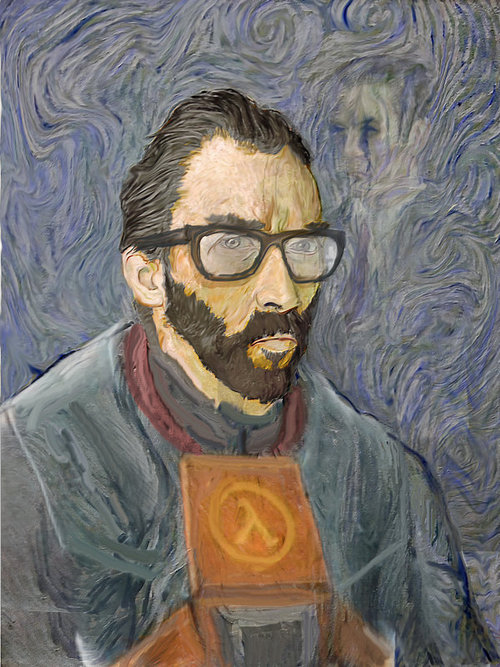
The most common solution to these problems is simply replacing human characters by aliens or fantasy monsters. Which, to be fair, is probably the best solution. The Super Mario games, for example, don't have the slightest pretension of artistic value, yet they are still universally loved. And you know why? Because they're fun. And this is very important: there is nothing wrong with simply being fun. Fun is good. I'm pro-fun in every medium there is. So, am I saying that games should simply give up any attempts to be artistic? No, of course not. But what I'm saying is that they shouldn't have the pretension of making any statement about the human condition when they're really not.
I have hopes for games as an artistic medium. Interaction with what you're exploring is something that's really new to media, and it offers a lot of genuinely fascinating possibilities. However, if game designers continue to fine-tune something that they will never be able to perfect, instead of coming up with genuinely interesting new ways of playing, I doubt there will ever be a mainstream game that has the emotional and intellectual complexity of a Citizen Kane, or even an Inception. I don't know how to fix this problem, but I definitely know there's something broken.
Alias
Because there are no really good songs about video games, here is some music from video games. Played by a guitar orchestra.

